Get free quotes from court interpretation near you
Takes about a minute. Free, no obligation; providers reply to you directly.
The summer I sat in on my first immigration hearing, I watched a certified interpreter work a courtroom with nothing but a notepad, a pocket transceiver the size of a TV remote, and thirty years of muscle memory. The equipment cost maybe $300. The interpretation was flawless. Across town, I’d seen a law firm spend $4,000 on a “professional interpreter station” that the interpreter hated, couldn’t configure, and ultimately shoved under the table.
That gap between what equipment vendors sell and what working court interpreters actually need is enormous — and almost nobody talks about it honestly.
The Short Version:For most court interpreting assignments, a reliable wireless transceiver system (budget $300–$1,300), a quality headset, and a decent mic are all you need. Everything else — booths, consoles, video monitors — is venue infrastructure, not interpreter gear. No amount of hardware compensates for weak technique.
Key Takeaways
- ISO 20109 is your acoustic floor, not your ceiling — equipment must limit peaks to 94 dBA SPL and constant noise to 80 dBA SPL; anything below that baseline is a liability
- Mode determines equipment — consecutive interpretation (depositions, Q&A) needs almost no hardware; simultaneous (trials, hearings) requires transceivers or a full booth setup
- NAJIT recommends specific gear — the Williams Sound DLT 400 and ListenTALK LK-1 by name, not generic “wireless systems”
- Two-way vs. one-way matters more than price — mismatching the system to the proceeding type is the most common and expensive equipment mistake
The Real Villain: Mismatch, Not Budget
The equipment industry has a convenient story: more expensive means more professional. Booths with ISO 2603-certified soundproofing, infrared transmission systems, integrated console panels — the catalog reads like you’re outfitting a UN assembly hall.
Here’s what most people miss: the vast majority of court interpreting happens in settings where that infrastructure would be absurd. A deposition conference room. A family court hearing room. A 200-square-foot attorney-client meeting space. Bringing a touring-grade simultaneous interpretation rig to a three-person deposition doesn’t make you professional — it makes you a logistical problem.
The real villain is mode mismatch: using one-way equipment when the proceeding requires two-way communication, or lugging simultaneous gear into a consecutive-only assignment.
What the Modes Actually Require
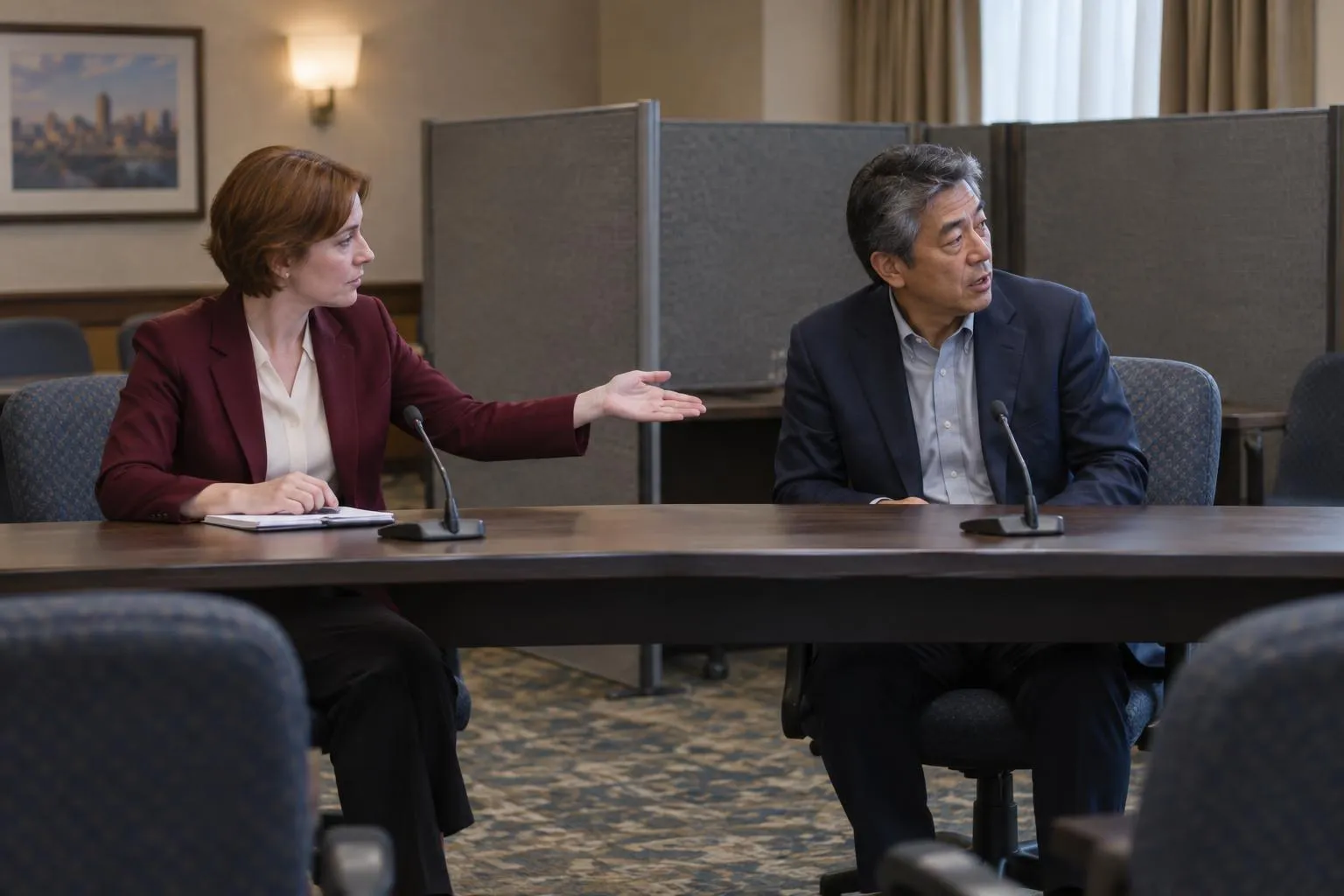
Consecutive interpretation — used in depositions, Q&A, attorney-client meetings — involves the interpreter listening, then rendering after the speaker pauses. Equipment need: essentially zero. A notepad for notation, maybe a table microphone if you’re in a larger room. That’s it.
Simultaneous interpretation — used during trials, motion hearings, arraignments where the LEP party needs to follow live proceedings — requires the interpreter and the LEP participant to hear separate audio streams without disrupting the room. This is where hardware actually matters.
Reality Check:If you’re doing depositions and someone is trying to sell you a booth setup, they’re either confused about the assignment or they’re selling you something you don’t need.
The Gear That Actually Matters (With Real Names)
Wireless Transceivers
For bilingual courtroom setups, NAJIT specifically calls out two systems:
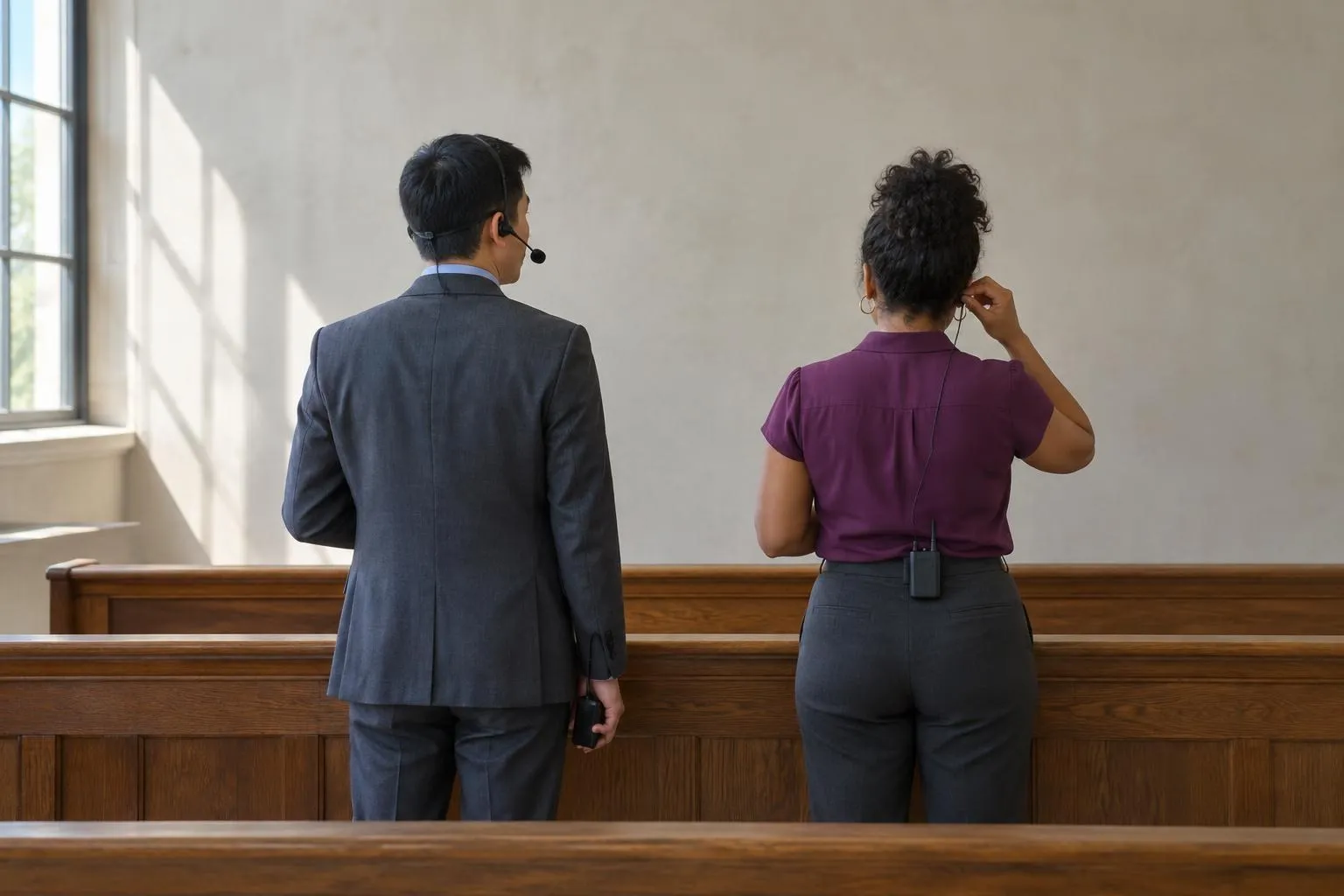
Williams Sound DLT 400 — Pocket-sized, push-to-talk, compatible with standard earbuds. The workhorse of courthouse work. Clips to a belt or pocket, doesn’t require a dedicated technician to operate, and holds a charge through a full trial day.
ListenTALK LK-1 (4-person set) — $1,299 for four transceivers with clips, an LA-452 headset, and LA-423 charger. The setup NAJIT illustrates: attorney on English-only, LEP party on Spanish-only, interpreter switches between channels on the master unit. Clean, tested, court-specific.
The push-to-talk and channel separation on both systems solves the most common pain point in basic transceivers: everyone hearing both languages simultaneously. In a two-language proceeding, that’s not just confusing — it can compromise the record.
Pro Tip:Encryption and rechargeable batteries aren’t marketing features — they’re operational requirements. Unencrypted RF in a courthouse can bleed into adjacent proceedings. Disposable batteries that die mid-testimony are a professional embarrassment.
Headsets
Wired over wireless, full-ear over on-ear for simultaneous work. The ISO 20109 acoustic protection standard (94 dBA peak limit, 80 dBA constant exposure limit) exists because prolonged exposure to courtroom audio through a poor headset causes hearing damage over time. This isn’t theoretical — it’s why the standard exists.
Comfort matters more than branding here. An interpreter doing a two-day trial in a headset that causes ear fatigue after three hours will produce worse interpretation in the afternoon session. That’s a quality-of-interpretation issue, not just a comfort issue.
Full Duplex vs. Half Duplex
Texas court guidelines (TCRIS) specifically call this out, but it applies everywhere: half-duplex systems create echo and speaker crosstalk — the speaker can’t hear incoming audio until they stop talking. Full duplex with echo cancellation eliminates that problem. If you’re evaluating a portable system for courtroom use, this is a binary requirement, not a nice-to-have.
Comparison: What to Buy vs. What to Skip
| Equipment | When You Need It | When You Don’t | Approximate Cost |
|---|---|---|---|
| Wireless transceivers (2-channel) | Simultaneous in any court setting | Consecutive-only assignments | $300–$1,300 |
| Quality over-ear headset | All simultaneous work | Consecutive (headset optional) | $80–$250 |
| Table/lapel microphone | Large rooms, group proceedings | Small conference rooms | $40–$200 |
| Portable booth | High-volume simultaneous (multi-day trial) | Standard hearings | Rental preferred |
| LanguageLine dual-handset cart | Remote/phone interpreting (TIP) | In-person assignments | Vendor quote |
| Infrared transmission system | Venue-level installation | Individual interpreter kit | Venue infrastructure |
| ISO 2603-certified fixed booth | Permanent courthouse installation | Field work | $10,000+ |
What Vendors Won’t Tell You
Over 66,000 federal judicial proceedings annually require interpreters. That volume has created a gear market that often prioritizes product differentiation over actual interpreter needs. “Professional grade,” “court-certified,” “ISO-compliant” get applied to everything from $50 earpieces to $8,000 console panels, sometimes without meaningful distinction.
I’ll be honest: the most important variables in interpretation quality aren’t on any spec sheet. Booth isolation and peak limiters protect you from acoustic harm — they don’t improve your vocabulary, your speed, or your ability to render legal register accurately under pressure.
A $1,299 ListenTALK setup in the hands of a FCICE-certified interpreter will outperform a $5,000 system operated by someone with shaky technique every single time.
Reality Check:The attorneys and court administrators evaluating your work can’t see your gear. They can hear your interpretation. Buy what protects your hearing and enables clean audio. Spend the rest on continuing education.
Practical Bottom Line
If you’re a working court interpreter building or upgrading your kit, here’s the short decision tree:
-
Identify your primary proceeding type. Mostly depositions? A good notepad and a table mic handles 90% of it. Trials and hearings? You need a two-channel transceiver system.
-
Buy to the NAJIT baseline. Williams Sound DLT 400 or ListenTALK LK-1 are specifically vetted for courthouse work. Start there before evaluating alternatives.
-
Check the acoustic standards. If a vendor can’t tell you whether their headset meets ISO 20109 peak limits, skip it.
-
Don’t rent booth infrastructure you can’t test. If a venue is providing equipment, arrive early, test every channel, and have a fallback plan.
-
Venue infrastructure is the venue’s problem. Fixed booths, infrared transmitters, PA integration — that’s not your kit to own unless you’re running a large-scale interpretation services business.
For a broader foundation on practice standards and certification requirements, the Complete Guide to Certified Court Interpreters covers the credentialing landscape that equipment decisions sit inside of.
Good gear keeps you legal, protects your hearing, and gets clean audio into the record. That’s the whole job. Everything else is marketing.
Done reading? Get quotes from certified court interpreters near you.
Takes about a minute. Free, no obligation; providers reply to you directly.
Popular cities:
Nick built this directory to help attorneys find credentialed court interpreters without relying on court-appointed lists that are often outdated or unavailable for depositions — a gap he ran into firsthand when sourcing a last-minute interpreter for a deposition with a Spanish-speaking witness.